
TL;DR:
- Adaptogen supplements are herbal products that enhance the body’s resistance to stress and support overall wellness. They include herbs like Ashwagandha, Rhodiola, and Panax Ginseng, which are available as standardized extracts for consistent effects. Standardized extracts guarantee active compound levels, making them more reliable for improving stress resilience, mental performance, and energy.
Adaptogen supplements are herbal products containing plant-derived compounds studied for its ability to enhance the body’s nonspecific resistance to stress and support overall well-being. The most studied examples of adaptogen supplements include Ashwagandha, Rhodiola rosea, and Panax Ginseng, each backed by research on stress resilience, fatigue reduction, and cognitive support. These herbs are available as standardized extracts in capsules, powders, and tinctures. Standardized extracts matter because they guarantee consistent levels of active compounds, which is what separates a therapeutic product from a generic herb powder. This guide covers the top adaptogen herbs, how they work, how blends are formulated, and what to watch for when buying.
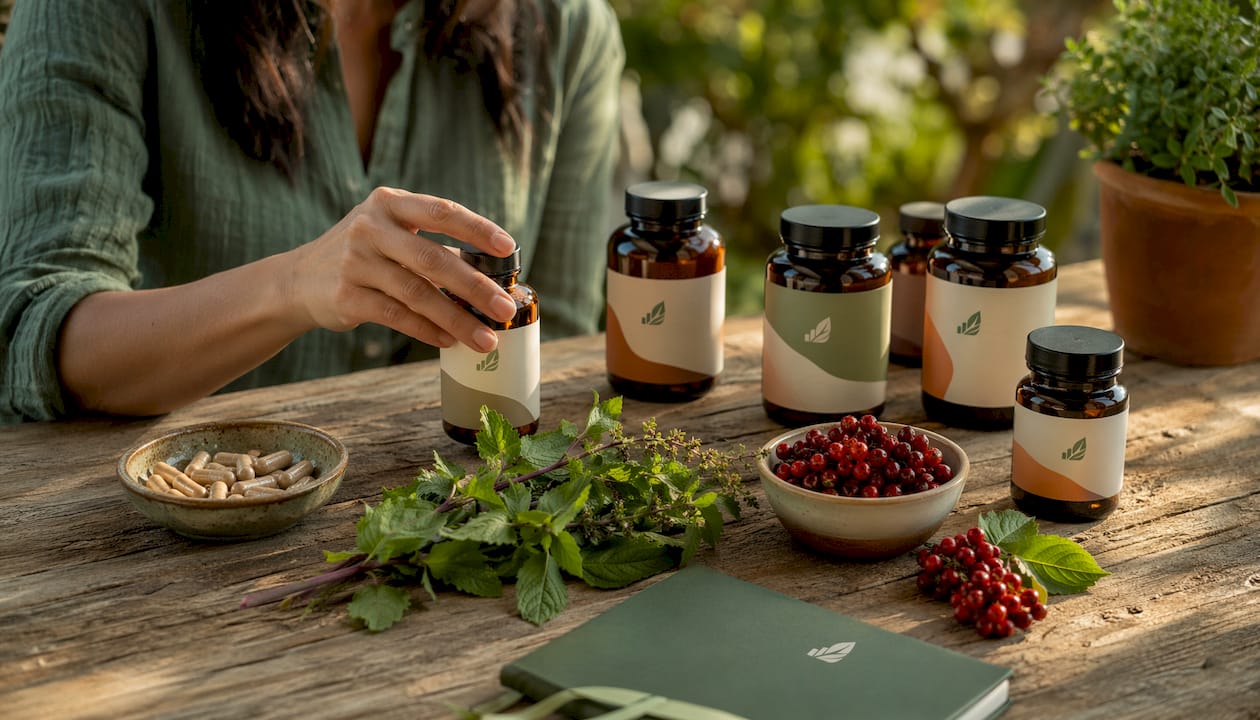
What are the top examples of adaptogen supplements?
Adaptogens are plant-derived substances that modulate multiple signaling pathways and carry distinct bioactive compounds. Each herb below has a defined active profile and a specific use case.
Ashwagandha (Withania somnifera)
Ashwagandha is the most widely used adaptogen in the Western supplement market. Its primary active compounds are withanolides, a group of steroidal lactones concentrated in the root. Clinical research links withanolides to reduced cortisol levels, improved sleep quality, and lower perceived stress scores. Standard supplements deliver 300 to 600mg of root extract per serving, typically standardized to 5% withanolides.
- Primary benefit: Stress and anxiety reduction
- Active compounds: Withanolides, alkaloids
- Common forms: Capsules, powders, gummies
- Timing: Best taken in the evening due to its calming effect
Rhodiola rosea
Rhodiola rosea is a Scandinavian and Siberian root used for centuries to combat fatigue and improve mental performance under pressure. Its key compounds are rosavins and salidroside. Standardized Rhodiola extracts with 3% rosavins and 1% salidroside are the benchmark for potency and reproducible effects. Rhodiola is particularly effective for people dealing with burnout or cognitive fatigue rather than generalized anxiety.
- Primary benefit: Mental stamina and fatigue resistance
- Active compounds: Rosavins, salidroside
- Common forms: Capsules, tablets
- Timing: Best taken in the morning; stimulating at higher doses
Panax Ginseng
Panax Ginseng, also called Asian or Korean Ginseng, contains ginsenosides as its primary bioactive compounds. These compounds support energy metabolism, immune function, and cognitive performance. Panax Ginseng differs from Siberian Ginseng (Eleuthero) in both chemistry and clinical evidence. Most quality supplements standardize to 5 to 7% ginsenosides per serving.
- Primary benefit: Energy, cognitive function, immune support
- Active compounds: Ginsenosides (Rb1, Rg1)
- Common forms: Capsules, liquid extracts
- Timing: Morning use preferred
Holy Basil (Tulsi)
Holy Basil is an Ayurvedic herb with strong antioxidant and anti-inflammatory properties. Its active compounds include eugenol, rosmarinic acid, and ursolic acid. Research links Holy Basil to reduced anxiety, lower blood sugar, and improved mental clarity. It pairs well with Ashwagandha in calming blends.
Schisandra chinensis
Schisandra is a five-flavor berry used in Traditional Chinese Medicine to support liver function, endurance, and mental focus. Its active lignans, particularly schisandrin B, protect cells from oxidative stress. Athletes and people with high cognitive demands often use Schisandra for its dual physical and mental support.
Bacopa monnieri
Bacopa is an Ayurvedic herb best known for its effects on memory and learning. Its active bacosides support neurotransmitter function and protect neurons from oxidative damage. Bacopa works slowly. Most people need 8 to 12 weeks of consistent use before noticing cognitive improvements.
Eleuthero (Siberian Ginseng)
Eleuthero is not a true ginseng but shares adaptogenic properties through its eleutherosides. It supports physical endurance, immune resilience, and stress tolerance. Eleuthero is a common ingredient in multi-adaptogen blends targeting athletic performance and general vitality.
How do adaptogen supplements work?
Adaptogens normalize physiological functions through pleiotropic mechanisms, meaning they act on multiple biological targets simultaneously rather than a single receptor. This is what separates them from stimulants, which force a single pathway response and often cause crashes or dependence.
The primary target is the hypothalamic-pituitary-adrenal (HPA) axis, the body’s central stress regulation system. Adaptogens modulate HPA axis output to prevent cortisol from spiking too high or staying elevated too long. They also induce heat shock proteins like Hsp70, which protect cells from stress-related damage, and support antioxidant enzyme activity to reduce oxidative load.
Neurotransmitter modulation is another key mechanism. Ashwagandha, for example, influences GABA receptors, which explains its calming effect. Rhodiola affects serotonin and dopamine pathways, which supports mood and mental energy. These are not sedating or stimulating effects in the pharmaceutical sense. They are regulatory effects that bring the body back toward balance.
Pro Tip: Look for products that list the standardized percentage of active compounds on the label. A Rhodiola supplement that lists “3% rosavins, 1% salidroside” is far more reliable than one that simply says “Rhodiola root powder.”
The table below shows typical active compound levels in quality standardized extracts.
| Adaptogen | Key Active Compounds | Standard Extract Level |
|---|---|---|
| Ashwagandha | Withanolides | 5% withanolides |
| Rhodiola rosea | Rosavins, Salidroside | 3% rosavins, 1% salidroside |
| Panax Ginseng | Ginsenosides | 5 to 7% ginsenosides |
| Bacopa monnieri | Bacosides | 20 to 45% bacosides |
| Eleuthero | Eleutherosides | 0.8 to 1% eleutherosides |
Standardized extracts produce more predictable clinical effects than crude herb powders. When you see a labeled percentage, you know the manufacturer tested and verified the active content.
What are examples of multi-adaptogen supplement blends?
Single-herb adaptogens work well, but clinical-grade blends target multiple stress pathways at once. Blend formulations mimic traditional and clinical usage patterns, supporting multiple HPA axis inputs for a more balanced stress response.
A well-documented example is the Adreset blend, which combines 800mg Cordyceps, 400mg Asian Ginseng, and 100mg Rhodiola per serving. This combination targets energy production through Cordyceps, cognitive and immune support through Ginseng, and fatigue resistance through Rhodiola. The result is a product designed for people who need sustained energy and mental clarity under sustained stress.
Another common blend pattern combines Ashwagandha, Holy Basil, and Rhodiola for a stress-and-calm profile. Ashwagandha and Holy Basil lower cortisol and support relaxation, while Rhodiola prevents the mental fatigue that often accompanies chronic stress. This type of blend suits people with high-pressure work schedules who also struggle with sleep quality.
The table below compares common blend types by their ingredient focus and intended effect.
| Blend Type | Key Ingredients | Primary Goal |
|---|---|---|
| Energy and resilience | Cordyceps, Asian Ginseng, Rhodiola | Sustained energy, HPA axis support |
| Stress and calm | Ashwagandha, Holy Basil, Schisandra | Cortisol reduction, relaxation |
| Cognitive focus | Bacopa, Rhodiola, Eleuthero | Memory, mental stamina |
| Immune and vitality | Eleuthero, Panax Ginseng, Schisandra | Immune resilience, general vitality |
For readers interested in how adaptogenic herbs support stress, the synergy between calming and energizing herbs is the key design principle behind most clinical blends.
Pro Tip: Match your blend to your stress profile. If your main issue is mental fatigue and low energy, choose a Rhodiola-forward blend. If anxiety and poor sleep are your primary concerns, choose an Ashwagandha-forward formula. Taking the wrong blend for your pattern can produce the opposite of the intended effect.
Timing also matters with blends. Stimulating blends with Rhodiola or Ginseng belong in the morning. Calming blends with Ashwagandha or Holy Basil work better in the evening. Mixing these up is one of the most common mistakes people make with adaptogen supplements.
What safety and quality factors matter when choosing adaptogens?
The supplement market is largely unregulated, which means product quality varies widely. Third-party testing is the most reliable way to verify that a product contains what its label claims and nothing it does not. Look for certifications from NSF International, USP, or Informed Sport on the label.
Adaptogens can interact with medications that affect blood sugar, blood pressure, and hormone levels. Ashwagandha, for example, may lower thyroid hormone levels in people already on thyroid medication. Panax Ginseng can interact with blood thinners and diabetes drugs. Natural origin does not mean universally safe, especially for people on prescription medications.
Consulting a healthcare provider before starting adaptogens is the right call for anyone with a chronic condition. This is not a formality. It is a practical step that prevents real interactions.
Pro Tip: Check the supplement quality guide at Rankofsupplements before purchasing any adaptogen product. It walks you through label reading, certification verification, and red flags to avoid.
Key do’s and don’ts for adaptogen use:
- Do choose standardized extracts with labeled active compound percentages
- Do take stimulating adaptogens (Rhodiola, Ginseng) in the morning
- Do take calming adaptogens (Ashwagandha, Holy Basil) in the evening
- Do verify third-party testing certifications before buying
- Do give adaptogens 4 to 8 weeks before evaluating results
- Don’t use adaptogens as a replacement for sleep, nutrition, or medical treatment
- Don’t assume natural means safe if you take prescription medications
- Don’t stack multiple stimulating adaptogens without professional guidance
- Don’t buy products with no standardization information on the label
Quality variations in the supplement market are significant. A poorly sourced Ashwagandha product with no standardization data may deliver almost no withanolides per serving. Paying slightly more for a verified, standardized product is not a luxury. It is the only way to get consistent results.
Key Takeaways
Adaptogens work best when you match the right herb to your specific stress pattern, choose standardized extracts, and support them with consistent sleep, nutrition, and exercise.
| Point | Details |
|---|---|
| Top adaptogen herbs | Ashwagandha, Rhodiola, Panax Ginseng, and Holy Basil are the most evidence-backed choices. |
| Standardized extracts matter | Look for labeled active compound percentages to guarantee potency and consistency. |
| Timing affects results | Take stimulating adaptogens in the morning and calming ones in the evening. |
| Blends target multiple pathways | Multi-herb formulas address energy, cortisol, and cognitive function simultaneously. |
| Safety requires due diligence | Verify third-party testing and consult a provider if you take prescription medications. |
Why I think most people approach adaptogens backward
Most people who try adaptogens pick a product based on marketing copy and expect results within a week. That is the wrong approach, and it leads to disappointment. Adaptogens are gradual resilience tools, not fast-acting supplements. The mechanism is regulatory, not stimulatory. You are training your stress response system, not overriding it.
My experience reviewing supplement research has made one thing clear: product quality separates the people who benefit from adaptogens and the people who conclude they do not work. A poorly standardized Rhodiola product with minimal rosavins will produce nothing measurable. A well-standardized product at the right dose, taken consistently for six to eight weeks, often produces real and noticeable changes in stress tolerance and energy.
Start with one herb, not a blend. Ashwagandha is the right first choice for most people because the evidence is strong, the dosing is well-established, and the calming effect is easy to notice. Once you understand how your body responds to a single adaptogen, adding a complementary herb like Rhodiola in the morning makes sense. Jumping straight to a five-herb blend makes it impossible to know what is working.
Sleep, nutrition, and exercise are not optional additions to an adaptogen routine. They are the foundation. Adaptogens work better when your baseline health habits are solid. Treating them as a shortcut around poor sleep or a high-stress lifestyle will always underdeliver. The common supplement mistakes I see most often come from people who skip the fundamentals and expect a capsule to do the heavy lifting.
matteo
Rankofsupplements has the adaptogen research you need
Finding reliable information on adaptogen supplements takes time, and the market is full of products with inflated claims and minimal evidence. Rankofsupplements cuts through that noise with science-backed reviews and rankings built for health-conscious readers who want facts, not marketing.
The Supplement Ingredient Library at Rankofsupplements covers every major adaptogen herb, including active compound profiles, dosing ranges, and safety notes. For readers ready to compare specific products, the best stress relief supplements rankings page lists top-rated options with full transparency on formulation and testing. If you want to go deeper on how adaptogens fit into a broader wellness plan, the 2026 adaptogens guide and the stress and anxiety supplement guide are the best places to start.
FAQ
What are adaptogens?
Adaptogens are plant-derived compounds that help the body resist physical, chemical, and biological stress by modulating the HPA axis and multiple cellular signaling pathways. Common examples include Ashwagandha, Rhodiola rosea, and Panax Ginseng.
How long do adaptogen supplements take to work?
Most adaptogens require 4 to 8 weeks of consistent daily use before producing noticeable effects. Some people with high stress loads report changes in sleep quality or energy within 2 to 3 weeks, but results vary by individual and product quality.
Can you take multiple adaptogens at the same time?
Yes, but timing matters. Stimulating adaptogens like Rhodiola belong in the morning, while calming ones like Ashwagandha work better in the evening. Stacking multiple stimulating herbs without guidance can cause sleep disruption.
Are adaptogen supplements safe for everyone?
Adaptogens are not universally safe. They can interact with medications that affect blood sugar, blood pressure, and thyroid hormones. Anyone on prescription drugs should consult a healthcare provider before starting any adaptogen supplement.
What is the best adaptogen for stress?
Ashwagandha is the most evidence-backed adaptogen for stress reduction, with clinical research supporting its ability to lower cortisol and improve perceived stress scores. Rhodiola rosea is the top choice specifically for mental fatigue and burnout.
Recommended
- Related article: The Role of Adaptogens in Wellness: 2026 Guide
- Top list: Best Stress Relief Supplements 2026
- Product review: Adaptogen 75 Capsules for Energy and Stress
- Wellness guide: How to Check Supplement Quality: A 2026 Guide