
TL;DR:
- Biotin does not significantly promote hair growth or reverse hair loss unless a deficiency is present. Most people already meet their biotin needs through a balanced diet, making supplements ineffective and unnecessary. Clinical evidence shows that nutrients like iron, vitamin D, and zinc are more important for hair health and hair loss treatment.
Biotin is a water-soluble B vitamin essential for maintaining healthy hair structure, but it does not meaningfully promote new hair growth or reverse hair loss unless you have a confirmed deficiency. That distinction matters enormously if you are spending money on biotin supplements hoping to stop shedding or regrow thinning hair. A 2026 systematic review covering 10 clinical studies found no significant effect on hair growth, density, or hair shaft caliber in biotin-sufficient participants. The supplement industry has built a multi-billion dollar category on a claim the science simply does not support. This article breaks down what biotin actually does, why it falls short as a hair loss remedy, and what the evidence says you should focus on instead.
Does biotin really help with hair loss? What the science says
The short answer is no, not for most people. Biotin, also called vitamin B7, supports the production of keratin, the protein that makes up hair strands. That role sounds promising, but supporting keratin infrastructure is not the same as stimulating hair follicles to grow new hair.
A systematic review published in May 2026 examined 10 studies on biotin supplementation and alopecia. Across all studies, researchers found no significant benefit for hair growth or density in individuals who were not biotin deficient. The review concluded that biotin monotherapy does not improve hair growth measures in non-deficient individuals. That is the clearest statement the clinical literature has produced on this topic.
“Supplementing without deficiency shows no hair growth benefit in clinical or real-world experience.”, Dr. Sharon Wong, consultant dermatologist, as cited by Which?
The case reports where biotin supplementation did help hair loss involved patients with rare genetic disorders, anticonvulsant drug use, or malabsorption conditions. These are not the typical supplement buyer. Biotin deficiency is extremely rare in the general population, according to UCLA Health. Despite that, biotin supplement sales increased 30-fold between 1999 and the mid-2020s. That gap between market growth and clinical need tells you everything about how marketing has outpaced the evidence.
What the studies actually measured
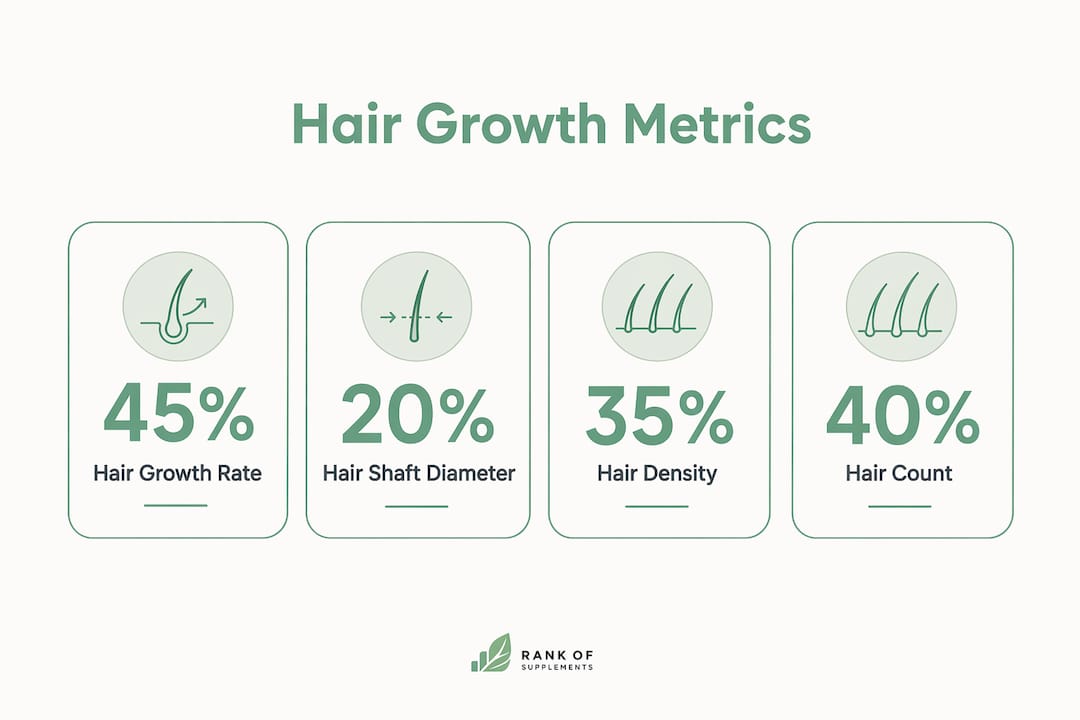
The 10 studies reviewed examined hair growth rate, hair shaft diameter, hair density, and overall hair count. None of these measures improved significantly with biotin supplementation in people who already had adequate biotin levels. Some studies reported subjective improvements in hair “feel” or appearance, but these were not confirmed by objective measurement. Subjective impressions are easy to manufacture with a placebo or a shampoo that coats the hair shaft.
The lab test risk nobody talks about
High-dose biotin supplements carry a specific safety risk that most buyers never hear about. Biotin mega-dosing at 5,000 to 10,000 mcg per day, which is 1,600 to 3,300 times the recommended daily intake, interferes with immunoassay-based blood tests. These include troponin tests used to detect heart attacks and thyroid function panels. The FDA has issued warnings about this. Clinicians recommend stopping biotin 48 to 72 hours before any blood work to avoid false results. If you are taking high-dose biotin and get a blood test without stopping first, your doctor could misread your results.
| Biotin Dose | Daily Recommended Intake | Risk Level |
|---|---|---|
| 30 mcg (dietary) | 100% | None |
| 5,000 mcg (common supplement) | ~16,667% | Lab interference possible |
| 10,000 mcg (high-dose supplement) | ~33,333% | Lab interference likely |
Why biotin pills rarely deliver on their promise
The biology here is straightforward. Biotin is water-soluble, which means your body does not store it. Any excess beyond what your cells need is excreted in urine. If you already get enough biotin from food, taking a supplement adds nothing to your hair follicles. It just makes expensive urine.
Most people eating a reasonably balanced diet already meet their biotin needs. Eggs, salmon, nuts, seeds, and sweet potatoes all contain meaningful amounts of biotin. A single cooked egg provides roughly 10 mcg of biotin. The recommended daily intake for adults is 30 mcg. Getting there through food is not difficult for most Americans.
Why topical biotin products do not work either
Biotin shampoos and serums are even less effective than oral supplements for hair growth. Biotin molecules are too large to penetrate hair follicles through the scalp. Any perceived thickening from biotin shampoos comes from polymers and coating agents in the formula, not from biotin reaching the follicle. Dermatologists confirm that topical biotin may offer mild scalp hydration benefits by acting on the skin surface, but it produces no measurable growth effect.
The “maintenance vs. growth” distinction is critical here. Biotin helps maintain the structural integrity of existing hair by supporting keratin production. It cannot repair follicle damage, reverse androgenetic alopecia (the clinical term for pattern hair loss), or stop stress-related shedding known as telogen effluvium. Clinical experience confirms that biotin supports keratin infrastructure but cannot stimulate regrowth in these conditions.
- Biotin supports existing hair structure. It does not create new follicle activity.
- Excess oral biotin is excreted. Your body does not bank it for later use.
- Topical biotin cannot reach hair follicles. The molecule is too large for follicle absorption.
- Most adults already meet biotin needs through diet alone.
- Marketing claims of dramatic regrowth are not supported by any controlled clinical trial.
Pro Tip: Before buying any biotin supplement, check whether you already consume eggs, nuts, or salmon regularly. If you do, you almost certainly have adequate biotin levels and a supplement will not change your hair.
What actually works for hair loss: biotin vs. proven factors
Biotin gets the spotlight, but the nutrients with real clinical backing for hair loss are iron, vitamin D, and zinc. Understanding how these compare to biotin changes how you approach the problem.

Ferritin levels below 70 ng/mL correlate with hair thinning, particularly in women experiencing telogen effluvium. Ferritin is the storage form of iron. Many women with hair shedding have ferritin levels in the 20 to 40 ng/mL range, which standard lab reports flag as “normal” but dermatologists consider suboptimal for hair health. Correcting low ferritin through diet or supplementation is evidence-based. Taking biotin instead is not.
| Nutrient | Evidence for Hair Loss | Common Deficiency? | Testable? |
|---|---|---|---|
| Iron (ferritin) | Strong, especially in women | Yes, common | Yes, serum ferritin test |
| Vitamin D | Moderate, linked to follicle cycling | Yes, widespread | Yes, 25-OH vitamin D test |
| Zinc | Moderate, supports follicle repair | Possible in restricted diets | Yes, serum zinc test |
| Biotin | Weak, only in confirmed deficiency | Extremely rare | Rarely warranted |
Vitamin D receptors are present in hair follicles, and low vitamin D levels are associated with disrupted hair cycling. Studies link vitamin D deficiency to both alopecia areata and telogen effluvium. Zinc plays a role in follicle repair and protein synthesis. Both are far more likely to be deficient in the average person than biotin.
Stress management also belongs in this conversation. Chronic stress elevates cortisol, which disrupts the hair growth cycle and pushes follicles into the shedding phase prematurely. No supplement fixes that. Sleep, exercise, and stress reduction are not glamorous recommendations, but they address a root cause that biotin cannot touch.
For androgenetic alopecia specifically, the FDA-approved treatments are minoxidil (topical or oral) and finasteride (for men). These have decades of clinical evidence behind them. Platelet-rich plasma (PRP) therapy and low-level laser therapy also have growing evidence bases. None of these involve biotin.
Pro Tip: Ask your doctor to test serum ferritin, 25-OH vitamin D, and serum zinc before buying any hair supplement. Fixing a real deficiency produces real results. Supplementing without a deficiency produces nothing measurable.
You can explore evidence-based options for hair thinning that go well beyond biotin if you want a structured comparison of what the clinical literature actually supports.
When should you actually consider biotin supplementation?
Biotin supplementation is appropriate in a narrow set of circumstances. Knowing those circumstances saves you money and redirects your attention to what will actually help.
-
You have a confirmed biotin deficiency. This requires a blood test and is most common in people with biotinidase deficiency (a rare genetic disorder), those on long-term anticonvulsant medications like valproic acid, or individuals with severe malabsorption conditions. If none of these apply to you, deficiency is extremely unlikely.
-
Your diet is severely restricted. Raw egg whites contain avidin, a protein that blocks biotin absorption. Eating large amounts of raw egg whites over time can deplete biotin. This is uncommon but real. Cooking eggs neutralizes avidin.
-
You are pregnant. Biotin needs increase slightly during pregnancy, and mild deficiency is more common in this group. A prenatal vitamin typically covers this.
-
Your doctor has recommended it. If a dermatologist or internist has reviewed your bloodwork and suggested biotin, that recommendation is grounded in your specific situation.
Outside these four scenarios, biotin supplementation for hair loss is not evidence-based. The risk of lab test interference from high-dose biotin is real and adds a safety concern to what is otherwise just wasted money.
If you are experiencing noticeable hair shedding or thinning, the right first step is a comprehensive blood panel, not a trip to the supplement aisle. Ask your doctor to check ferritin, complete blood count, thyroid function (TSH and free T4), vitamin D, and zinc. These tests identify the actual causes of most nutritional hair loss. Understanding how long hair supplements take to work is also worth reading before you commit to any regimen, because timeline expectations matter as much as ingredient choice.
If you want to understand what supplements genuinely support hair health, the Rankofsupplements guide on boosting hair health with supplements covers the evidence behind ingredients that actually have clinical backing.
Key takeaways
Biotin does not cause hair regrowth in people without a confirmed deficiency. That single fact should guide every decision you make about biotin and hair health.
| Point | Details |
|---|---|
| Biotin does not regrow hair | Clinical trials show no benefit for hair growth or density in biotin-sufficient individuals. |
| Deficiency is extremely rare | Most people already meet biotin needs through a normal diet, making supplementation unnecessary. |
| Iron, vitamin D, and zinc matter more | These nutrients have stronger clinical evidence for hair loss and are more commonly deficient. |
| High-dose biotin carries real risk | Doses of 5,000 to 10,000 mcg can cause false results in critical blood tests like troponin and thyroid panels. |
| Test before you supplement | A blood panel for ferritin, vitamin D, and zinc identifies real deficiencies worth treating. |
Why I think the biotin conversation is mostly a distraction
I have reviewed hundreds of supplement studies and spoken with enough dermatologists to recognize a pattern. Biotin is the supplement equivalent of a placebo with great marketing. It is safe, cheap, and easy to take. It makes hair feel slightly thicker in the short term because many biotin shampoos coat the shaft. That tactile improvement is real. The follicle-level change is not.
What frustrates me most is the opportunity cost. People experiencing genuine hair loss spend months taking biotin, waiting for results that will never come, while the actual cause goes unaddressed. Low ferritin is the most common nutritional driver of hair shedding in women, and it is correctable. Vitamin D deficiency is widespread and fixable. Thyroid dysfunction causes significant hair loss and responds to treatment. None of these get fixed by biotin.
The supplement industry has been extraordinarily effective at selling the idea of a simple solution to a complex problem. Hair loss is emotionally loaded. People want an answer that does not involve a doctor’s appointment or a prescription. Biotin fills that psychological need perfectly. It is accessible, it feels proactive, and it rarely causes obvious harm. But it also rarely causes obvious benefit.
My honest recommendation is this: treat your hair loss like the medical issue it is. Get tested. Find the actual cause. Then address it with tools that have clinical evidence behind them. Biotin can stay on the shelf unless your doctor specifically tells you otherwise. Check the best hair loss supplements for 2026 if you want to see what the evidence actually supports.
matteo
How Rankofsupplements helps you cut through the noise
Rankofsupplements exists precisely for situations like this one. The supplement market is full of products that sound compelling and deliver little. The platform’s ingredient library breaks down the clinical evidence behind every major supplement ingredient, including biotin, iron, vitamin D, and zinc, so you can see exactly what the research says before you spend a dollar. For hair loss specifically, the best hair loss supplements rankings are built on clinical evidence and transparent methodology, not sponsored placements. If you want a starting point grounded in science rather than marketing, that is where to go. You can also browse supplements by health condition to find options matched to your specific situation.
FAQ
Does biotin help with hair loss if I take it daily?
Not if you already have adequate biotin levels, which most people do. A 2026 systematic review found no significant improvement in hair growth or density from daily biotin supplementation in non-deficient individuals.
How much biotin do I need for hair health?
The recommended daily intake for adults is 30 mcg, easily met through foods like eggs, nuts, and salmon. Supplements marketed at 5,000 to 10,000 mcg provide no additional hair benefit and increase the risk of false blood test results.
What vitamins actually help with hair loss?
Iron (specifically ferritin), vitamin D, and zinc have the strongest clinical evidence for nutritional hair loss. Ferritin below 70 ng/mL is linked to hair thinning, and correcting deficiencies in these nutrients produces measurable improvements.
Can biotin deficiency cause hair loss?
Yes, but confirmed biotin deficiency is extremely rare. It occurs primarily in people with biotinidase deficiency, those on certain anticonvulsant medications, or individuals with severe malabsorption. UCLA Health confirms that deficiency remains very rare despite the 30-fold increase in supplement sales.
Is topical biotin in shampoos effective for hair growth?
No. Biotin molecules are too large to penetrate hair follicles through the scalp. Any thickening effect from biotin shampoos comes from coating polymers in the formula, not from biotin reaching the follicle.