
TL;DR:
- Lutein enhances eye health by increasing macular pigment density and reducing AMD progression risk. It primarily offers protective benefits rather than correcting refractive errors or restoring lost vision. Consistent supplementation with 10 mg daily, paired with a lutein-rich diet, supports retinal resilience over time.
Lutein is a carotenoid that concentrates in the macula of the human eye, where it functions as both a blue light filter and an antioxidant to protect retinal tissue from oxidative damage. The question of whether lutein supplements improve eyesight naturally has a nuanced answer: clinical evidence confirms that lutein supplementation increases macular pigment optical density (MPOD), slows progression of age-related macular degeneration (AMD), and supports retinal resilience, but it does not correct refractive errors or restore lost vision. The landmark AREDS2 trial, using 10 mg lutein plus 2 mg zeaxanthin daily, established the clinical standard for supplementation. This article breaks down what the science actually shows, which eye conditions benefit most, and how to use lutein supplements effectively.
Do lutein supplements improve eyesight naturally? What the science says
Lutein’s role in eye health is grounded in its selective accumulation in the macula, where it forms macular pigment alongside zeaxanthin. This pigment acts as a biological shield, absorbing high-energy blue light and neutralizing free radicals before they damage photoreceptor cells. Without adequate macular pigment, oxidative stress accumulates over years and accelerates retinal degeneration.
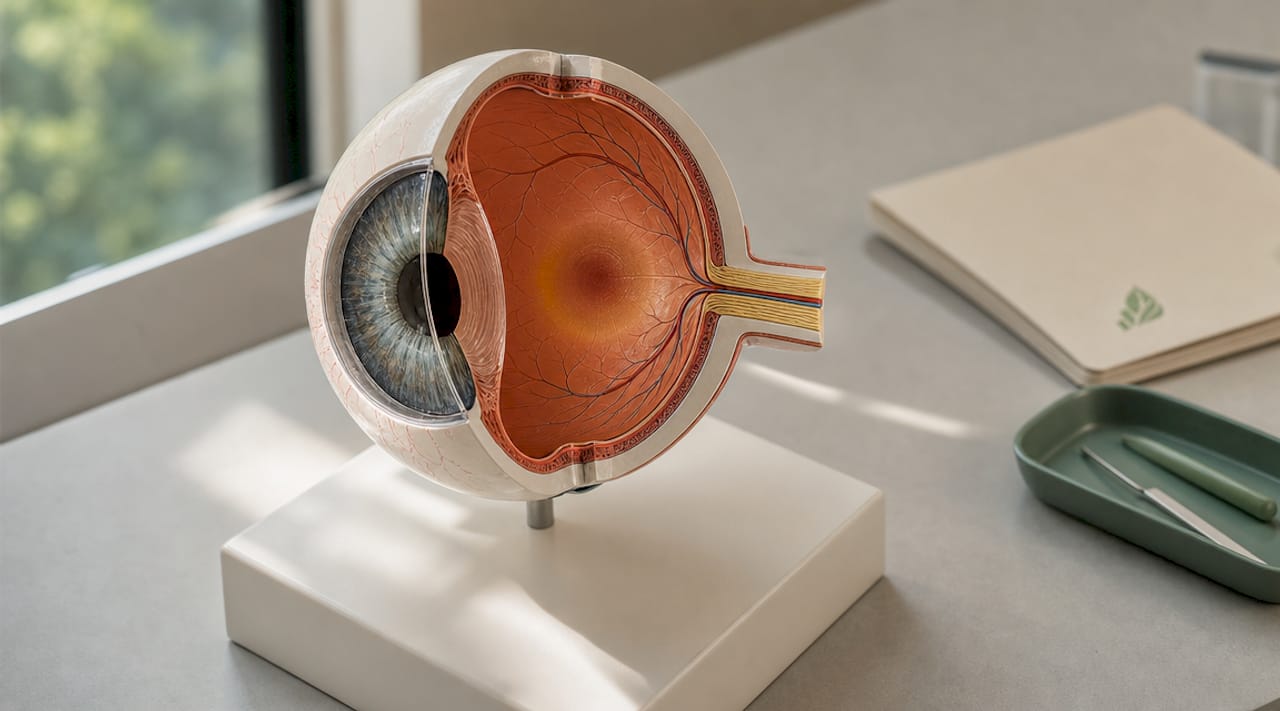
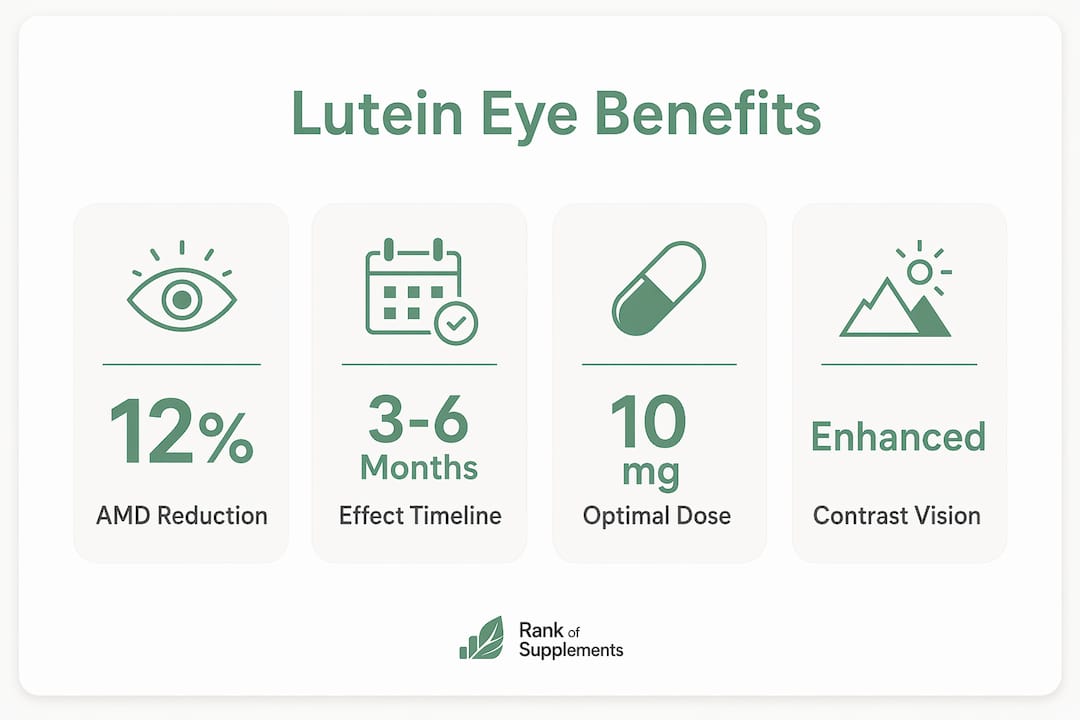
The most significant clinical evidence comes from the AREDS2 trial, a large randomized study that tested a formulation containing 10 mg lutein and 2 mg zeaxanthin daily. Participants taking this combination showed a 12% reduction in AMD progression risk over five years compared to those not receiving lutein and zeaxanthin. A 12% risk reduction in a condition that causes irreversible central vision loss is clinically meaningful, not a marginal finding.
More recent data reinforces this picture. A 2026 prospective pilot study in intermediate AMD patients found that oral lutein supplementation increased MPOD and preserved visual acuity over six months, with no adverse events reported. MPOD, measured by reflectometry, serves as a direct biomarker for lutein’s presence in the retina. Higher MPOD correlates with better macular resilience and reduced susceptibility to photochemical damage.
Key insight: MPOD changes can occur before measurable improvement in best-corrected visual acuity (BCVA). This means your retina is benefiting from supplementation even when you do not notice a dramatic change in how clearly you read an eye chart.
One important distinction separates biomarker improvement from functional vision change. Functional vision improvements from lutein may include enhanced contrast sensitivity and faster glare recovery, neither of which standard visual acuity tests fully capture. Patients who report “seeing better” after lutein supplementation are often describing improved contrast and reduced light sensitivity rather than sharper letters on a chart. Studied doses cluster around 6 to 20 mg per day, with the AREDS2 formulation at 10 mg representing the best-validated target.
What conditions does lutein actually help with?
Lutein supplementation does not benefit every aspect of eyesight equally. Understanding where the evidence is strong versus where it is limited helps you set realistic expectations before spending money on supplements.
Where lutein shows clear benefit:
- AMD progression delay. The AREDS2 data is the strongest evidence base. Lutein and zeaxanthin supplementation reduces AMD progression risk in people already diagnosed with intermediate AMD. This is the primary clinical use case.
- Macular pigment density. Supplementation reliably increases MPOD in people with low baseline levels, which is common in older adults and those with poor dietary lutein intake.
- Contrast sensitivity and glare recovery. These functional improvements are documented in studies measuring outcomes beyond standard visual acuity, making them relevant for daily visual comfort.
- Retinal protection in screen-heavy environments. Lutein’s blue light filtering properties reduce photochemical stress in people with prolonged digital screen exposure, supporting long-term retinal health.
Where evidence is limited or mixed:
- Cataracts. High dietary lutein intake correlates with lower nuclear cataract risk, but supplementation studies have not replicated this effect consistently. The benefit appears tied to dietary patterns rather than isolated supplementation.
- General vision enhancement in healthy eyes. There is insufficient evidence to support lutein supplementation for preventing AMD in people without a diagnosis or for improving vision in otherwise healthy eyes.
- Refractive errors. Lutein does not change the shape of the cornea or lens. Myopia, hyperopia, and astigmatism are structural issues that lutein cannot address. It is not a replacement for corrective lenses or refractive surgery.
- Glaucoma and optic nerve conditions. Current evidence does not support lutein as a treatment for intraocular pressure or optic nerve damage.
The core principle is that lutein supports retinal health and protects against oxidative damage rather than correcting structural vision problems. Framing it as a protective and preservative agent, rather than a vision restorer, aligns with what the clinical data actually shows.
Natural sources of lutein vs. supplements: what you need to know
Food provides lutein, but the amounts vary widely and absorption depends on several factors. Dietary sources of lutein include spinach, kale, broccoli, egg yolks, and other colorful vegetables. Cooked spinach delivers roughly 20 mg of lutein per cup, making it one of the most concentrated sources available. Egg yolks contain less lutein by weight but offer higher bioavailability because the fat matrix improves absorption.
The challenge is consistency. Most Americans consume well under 2 mg of lutein per day through diet, far below the 10 mg used in AREDS2. Reaching therapeutic levels through food alone requires eating large portions of dark leafy greens daily, which most people do not sustain. This is where supplementation fills a practical gap.
| Source | Lutein content (approx.) | Bioavailability notes |
|---|---|---|
| Cooked spinach (1 cup) | ~20 mg | Good, enhanced by dietary fat |
| Raw kale (1 cup) | ~11 mg | Moderate, improved when cooked |
| Egg yolk (1 large) | ~0.2 mg | High due to fat matrix |
| Broccoli (1 cup cooked) | ~2 mg | Moderate |
| Lutein supplement (standard dose) | 10 mg | Consistent, formulation-dependent |
Supplement quality matters significantly. Lutein supplements derived from marigold flower extract (Tagetes erecta) are the most studied and widely used form. Free-form lutein absorbs faster than lutein esters, though both forms raise MPOD with consistent use. Look for products that pair lutein with zeaxanthin in the AREDS2 ratio and include a fat source or recommend taking the supplement with a meal to maximize absorption.
Pro Tip: Take your lutein supplement with the fattiest meal of the day. Lutein is fat-soluble, and pairing it with dietary fat can increase absorption by a meaningful margin compared to taking it on an empty stomach.
Combining a lutein-rich diet with supplementation produces better outcomes than either approach alone. Spinach and kale at dinner, combined with a 10 mg lutein supplement, gives your retina both the consistent dietary matrix and the therapeutic dose that clinical trials have validated.
How to use lutein supplements effectively for natural eyesight improvement
Getting the most from lutein supplementation requires attention to dose, timing, duration, and realistic outcome expectations. Following a structured approach prevents both under-dosing and the false belief that more is always better.
-
Start with the AREDS2 dose. The best-validated starting point is 10 mg lutein plus 2 mg zeaxanthin daily. This is the dose used in the largest and most rigorous clinical trial for AMD. Exceeding this dose does not guarantee greater benefits and moves you outside the range of well-studied evidence.
-
Take it consistently with food. Lutein is fat-soluble. Missing doses or taking the supplement without food reduces absorption and undermines the steady-state accumulation needed to raise MPOD. Daily consistency over weeks and months is what produces measurable retinal changes.
-
Allow at least three to six months before evaluating results. MPOD increases gradually. The 2026 pilot study measured meaningful changes over six months. Expecting dramatic vision changes within two weeks leads to premature discontinuation of a supplement that may be working at the cellular level.
-
Track functional outcomes, not just visual acuity. Pay attention to contrast sensitivity, glare recovery after headlights at night, and visual comfort during prolonged screen use. These are the areas where lutein’s effects are most likely to be noticeable before standard acuity improves.
-
Consider pairing with omega-3s. Clinical trials combining lutein, zeaxanthin, and omega-3s suggest possible synergistic benefits for vision and AMD progression prevention. Omega-3 fatty acids support the structural integrity of photoreceptor cell membranes, complementing lutein’s antioxidant role.
-
Consult an eye care provider before starting. Supplementation strategies should account for your baseline macular pigment, nutritional status, and absorption variability. An ophthalmologist or optometrist can measure your MPOD and help you determine whether supplementation is appropriate for your specific situation.
Pro Tip: If you are already taking a multivitamin, check whether it contains lutein. Many eye-specific multivitamins include 2 to 6 mg, which may reduce how much additional supplementation you need to reach the 10 mg target.
The most common mistake people make with lutein supplements is stopping too soon. Retinal tissue changes slowly. Consistent supplementation over months, not days, is the mechanism through which lutein delivers its documented benefits.
Key takeaways
Lutein supplements improve eyesight naturally by increasing macular pigment density and slowing AMD progression, but they protect retinal tissue rather than correct structural vision problems.
| Point | Details |
|---|---|
| AMD risk reduction | AREDS2 showed a 12% reduction in AMD progression with 10 mg lutein plus 2 mg zeaxanthin daily. |
| MPOD as the key biomarker | Macular pigment optical density rises with supplementation and predicts retinal resilience before acuity changes. |
| Realistic expectations | Lutein improves contrast sensitivity and glare recovery, not refractive errors or lost vision. |
| Diet plus supplements | Combining lutein-rich foods with a 10 mg supplement produces better outcomes than either approach alone. |
| Consistency is required | Meaningful MPOD changes take three to six months of daily supplementation to develop. |
What I actually think about lutein for vision support
The evidence for lutein is more solid than most people realize, and more limited than supplement marketing suggests. Both things are true at the same time.
What I find genuinely compelling is the AREDS2 data. A 12% reduction in AMD progression risk over five years is not a dramatic headline, but AMD is a condition with no cure and irreversible consequences. Slowing it down matters enormously to the people living with it. The 2026 pilot study data on MPOD preservation adds another layer of confidence that the mechanism is real and measurable.
Where I get cautious is with the broader claims around “natural eyesight improvement.” Lutein does not sharpen blurry vision. It does not reduce your glasses prescription. If you are 35 years old with healthy eyes and you are hoping lutein will let you ditch your contacts, the evidence does not support that expectation. What lutein does is build a biological reserve in your retina that may protect you from damage over decades. That is a different kind of benefit, and it is worth understanding clearly before you buy.
The supplement quality issue is real and underappreciated. Not all lutein products are equivalent. Free-form lutein from marigold extract, paired with zeaxanthin and taken with food, is the formulation closest to what clinical trials have studied. A cheap product with poor bioavailability is not the same as the AREDS2 formulation, regardless of what the label says.
My honest recommendation: if you are over 50, have a family history of AMD, or have been told your macular pigment is low, lutein supplementation is worth taking seriously. For everyone else, prioritize a lutein-rich diet first, and consider supplementation as a targeted tool rather than a general wellness habit. You can find detailed reviews of supplements for AMD prevention that break down which products actually match the clinical evidence.
matteo
Find the right lutein supplement for your eyes
Choosing a lutein supplement is not as simple as grabbing the first bottle on the shelf. Formulation, dose, and ingredient pairing all affect whether you are getting the evidence-backed version or a product that looks similar on the label but performs differently in your body.
Rankofsupplements reviews and ranks eye health supplements based on clinical evidence, ingredient quality, and transparency. The eye health supplement rankings cover the top-rated lutein products, including those that match the AREDS2 formulation. For a deeper look at how lutein and zeaxanthin compare to other retinal support ingredients, the supplement ingredient library provides science-backed profiles for every compound relevant to vision health.
Recommended reading:
- Science-backed supplements for age-related vision loss
- Best eye health supplements 2026
- Best supplements for macular degeneration prevention
- Supplement ingredient library: lutein and eye health
FAQ
Do lutein supplements actually improve vision?
Lutein supplements improve specific aspects of vision, particularly contrast sensitivity and glare recovery, and slow AMD progression in diagnosed patients. They do not correct refractive errors or restore vision already lost to retinal damage.
How long does it take for lutein to work?
Measurable increases in macular pigment optical density typically develop over three to six months of consistent daily supplementation. Functional improvements in contrast sensitivity may follow, but standard visual acuity changes are slower and less predictable.
What is the best dose of lutein for eye health?
The best-validated dose is 10 mg lutein combined with 2 mg zeaxanthin daily, based on the AREDS2 clinical trial. Exceeding this dose moves outside the range of well-studied evidence and does not guarantee additional benefit.
Can lutein supplements prevent cataracts?
High dietary lutein intake correlates with lower nuclear cataract risk, but supplementation evidence for cataract prevention is mixed and weaker than the AMD data. Dietary patterns appear more protective than isolated supplementation for cataracts.
Is it better to get lutein from food or supplements?
Combining both produces the best outcomes. Foods like cooked spinach and egg yolks provide lutein with good bioavailability, but most people do not consistently reach the 10 mg therapeutic threshold through diet alone. Supplements fill that gap reliably.