
TL;DR:
- Berberine is a plant compound with proven benefits for insulin sensitivity, fasting blood glucose, and HbA1c in prediabetes and type 2 diabetes. Clinical evidence shows it reduces HOMA-IR scores by up to 44.7% and HbA1c by around 1.5%, similar to metformin effects. Proper dosing, timing, and medical consultation are essential for safety and optimal results.
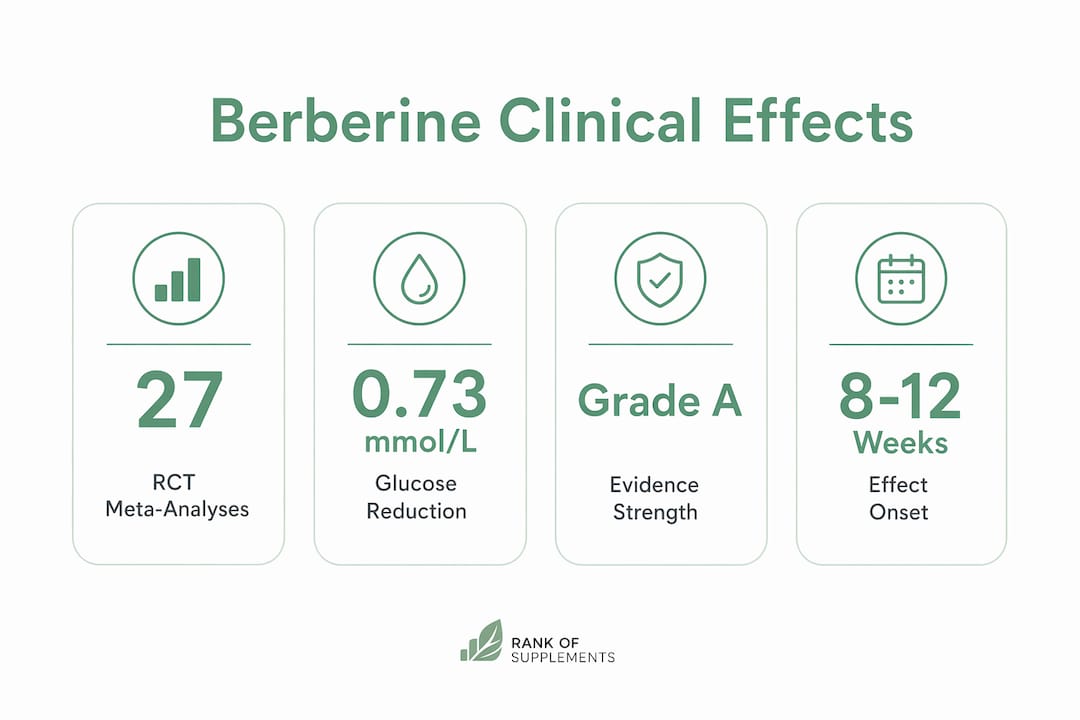
Berberine is a plant-derived compound with clinically proven effects on insulin resistance, fasting blood glucose, and HbA1c in people with prediabetes and type 2 diabetes. A meta-analysis of 27 RCTs involving more than 2,500 participants confirmed that berberine significantly improves fasting glucose, HbA1c, and insulin sensitivity markers, with HOMA-IR reductions reaching up to 44.7%. So yes, berberine supplements do work for insulin resistance, but the full picture is more nuanced than most supplement marketing suggests. This article breaks down the science, the mechanisms, the practical dosing, and where berberine fits alongside other treatments so you can make a genuinely informed decision.

Do berberine supplements work for insulin resistance? what the science says
The clinical evidence behind berberine is stronger than most natural supplements can claim. The same meta-analysis of 27 RCTs found HbA1c reductions of approximately 1.5%, a result comparable to metformin monotherapy. That is not a minor finding. Metformin is the first-line pharmaceutical for type 2 diabetes, and a natural compound matching its glycemic impact in controlled trials is significant.
A separate systematic meta-analysis found that berberine reduces fasting plasma glucose by approximately 0.73 mmol/L and HbA1c by 0.19%. These numbers look smaller because this analysis applied stricter inclusion criteria. The takeaway is that berberine’s glucose-lowering effects are well established, while direct improvements in insulin sensitivity are real but somewhat variable across studies.
What the key clinical outcomes look like
| Outcome Measure | Berberine Effect | Comparison |
|---|---|---|
| Fasting Blood Glucose | Reduced ~0.73 mmol/L | Comparable to low-dose metformin |
| HbA1c | Reduced ~1.5% (larger trials) | Matches metformin monotherapy |
| HOMA-IR (insulin resistance score) | Reduced up to 44.7% | Stronger than most supplements |
| Body Weight | Modest, inconsistent reduction | Well below GLP-1 analogs |
The HOMA-IR figure deserves attention. HOMA-IR is the standard clinical tool for measuring insulin resistance. A reduction of up to 44.7% in that score means berberine is genuinely moving the needle on the underlying problem, not just masking blood sugar numbers.
“Berberine’s glucose-lowering effects are more strongly established than its insulin-sensitizing mechanisms, which still require more high-quality mechanistic studies.” — Suplmnt Evidence Review
Where the evidence gets complicated is in study variability. Dosing protocols, participant populations, trial lengths, and formulation quality differ widely across studies. Some trials use 500 mg three times daily; others use lower doses or different delivery forms. That variability explains why effect sizes differ between meta-analyses. The core signal, however, is consistent: berberine improves glycemic control in people who already have elevated blood sugar or insulin resistance.
The evidence is rated Grade A by WeightCited for insulin resistance, meaning the body of research is large enough and consistent enough to support clinical use. That puts berberine in a very small group of supplements with that level of backing.
How does berberine actually work in your body?
Berberine’s primary mechanism is AMPK activation. AMPK, or AMP-activated protein kinase, is an enzyme that acts like a master metabolic switch. When berberine activates AMPK, it triggers a cascade of effects that improve how your cells take up and use glucose, and it increases sensitivity at the insulin receptor level.
Here is what that looks like across multiple biological pathways:
- Glucose uptake: AMPK activation increases the translocation of GLUT4 transporters to cell membranes, allowing muscle and fat cells to absorb glucose more efficiently without requiring as much insulin.
- Hepatic glucose production: Berberine suppresses gluconeogenesis in the liver, which is the process by which your liver manufactures new glucose. In insulin-resistant individuals, this process runs too fast. Berberine slows it down.
- Gut microbiota: Berberine reshapes the composition of gut bacteria in ways that reduce systemic inflammation and improve metabolic signaling. This is a newer area of research, but the gut-metabolism connection is increasingly recognized as central to insulin resistance.
- Fat metabolism: Berberine inhibits fatty acid synthesis and promotes fat oxidation, which reduces the lipid accumulation that worsens insulin resistance in liver and muscle tissue.
One important nuance: berberine does not appear to directly stimulate insulin secretion from the pancreas in the way some diabetes drugs do. Its primary action is on insulin sensitivity and glucose handling, not insulin production. That distinction matters because it means berberine carries a lower risk of hypoglycemia when used alone, though the risk rises sharply when combined with insulin or sulfonylureas.
Pro Tip: If you want to track whether berberine is actually improving your insulin sensitivity, ask your doctor to measure your HOMA-IR score at baseline and again after 12 weeks of consistent use. Fasting glucose alone does not tell the full story.
How should you take berberine safely and effectively?
Getting the dosing right matters more with berberine than with most supplements, because both underdosing and overdosing create problems. The standard clinical protocol used across the majority of successful trials is 500 mg taken 2–3 times daily with meals, for a maximum of 1,500 mg per day.
Here is a practical framework for using berberine safely:
- Start low. Begin with 500 mg once daily for the first week. This lets your digestive system adjust and helps you identify any sensitivity before committing to the full protocol.
- Take it with food. Taking berberine with meals reduces gastrointestinal side effects and synchronizes the supplement with postprandial glucose metabolism, which is when blood sugar rises after eating. This is the optimal window for berberine’s action.
- Scale to the full dose. After one week, move to 500 mg twice daily, then 500 mg three times daily if tolerated. Do not exceed 1,500 mg per day.
- Expect a timeline of 8–12 weeks. HOMA-IR improvements typically appear after 8–12 weeks of consistent use. Do not judge effectiveness after two or three weeks.
- Disclose it to your doctor. Berberine is a strong CYP3A4 inhibitor, meaning it slows the liver enzyme responsible for metabolizing many prescription drugs. This can raise blood levels of medications like cyclosporine, statins, and certain blood pressure drugs to dangerous levels.
The CYP3A4 interaction is the most underestimated risk with berberine. People assume “natural” means safe in all contexts. It does not. If you take any prescription medication, a conversation with your doctor before starting berberine is not optional.
Common side effects include diarrhea, cramping, nausea, and constipation. These are dose-dependent and usually manageable by taking berberine with food and starting at a lower dose. Severe gastrointestinal symptoms that persist beyond two weeks are a signal to stop and consult a healthcare provider.
Pro Tip: Splitting your daily dose across three meals rather than two reduces the peak concentration in your gut at any one time, which is the most effective way to minimize digestive side effects without sacrificing efficacy.
How does berberine compare to other supplements and medications?
Berberine sits at the top of the evidence hierarchy for insulin resistance supplements, but it does not operate in isolation. Understanding how it compares to other options helps you decide where it fits in your plan.
Berberine vs. other natural supplements
| Supplement | Primary Mechanism | Evidence Strength | Effect on Insulin Resistance |
|---|---|---|---|
| Berberine | AMPK activation, gut microbiota | Grade A (multiple RCTs) | Strong, up to 44.7% HOMA-IR reduction |
| Myo-Inositol | Insulin signaling pathway | Moderate (PCOS-focused) | Moderate, especially in PCOS |
| Magnesium | Cofactor for insulin receptor | Moderate | Modest, strongest in deficiency |
| Chromium | Enhances insulin receptor binding | Weak to moderate | Small effect sizes |
| Alpha-Lipoic Acid | Antioxidant, AMPK activation | Moderate | Moderate, especially neuropathy |
Berberine’s advantage over magnesium and chromium is the size and quality of its evidence base. Myo-inositol is a legitimate competitor, particularly for women with polycystic ovary syndrome, where insulin resistance is hormonally driven. Alpha-lipoic acid shares some mechanistic overlap with berberine through AMPK but has a narrower evidence base for glycemic control specifically.
Berberine vs. metformin and glp-1 analogs
Berberine and metformin share overlapping mechanisms, including AMPK activation and suppression of hepatic glucose production. Head-to-head trials have found comparable glycemic outcomes in some populations, which is why berberine is sometimes called “nature’s metformin.” That label is useful for conveying potency but misleading if it implies equivalence.
Metformin has decades of safety data, established cardiovascular benefits, and a well-understood side effect profile. Berberine does not yet have that long-term evidence base. GLP-1 receptor agonists like semaglutide (Ozempic, Wegovy) operate through a completely different mechanism and produce substantially greater weight loss and cardiovascular protection. Berberine’s body composition effects are modest and inconsistent compared to GLP-1 analogs.
The honest position is this: berberine is a credible adjunct or a reasonable option for people who cannot tolerate or access pharmaceutical treatment, but it is not a replacement for standard care. Healthcare professionals consistently note that berberine works best when combined with dietary changes, exercise, and medical monitoring. It is also most effective in people who already have metabolic dysfunction. Benefits are strongest in those with insulin resistance or elevated glucose, not in metabolically healthy adults.
Key takeaways
Berberine is one of the most evidence-backed natural supplements for insulin resistance, with clinical data supporting meaningful reductions in fasting glucose, HbA1c, and HOMA-IR scores after 8–12 weeks of consistent use at 500 mg taken 2–3 times daily.
| Point | Details |
|---|---|
| Clinical evidence is strong | A meta-analysis of 27 RCTs shows HOMA-IR reductions up to 44.7% and HbA1c drops comparable to metformin. |
| Mechanism centers on AMPK | Berberine activates AMPK to improve glucose uptake, reduce liver glucose output, and reshape gut bacteria. |
| Dosing and timing matter | Take 500 mg with meals, up to 1,500 mg daily, and allow 8–12 weeks before evaluating results. |
| Drug interactions are serious | Berberine inhibits CYP3A4 and can raise blood levels of statins, cyclosporine, and diabetes medications. |
| Best for at-risk individuals | Benefits are strongest in people with existing insulin resistance or prediabetes, not healthy adults. |
What i’ve learned after years of reviewing metabolic supplements
I have reviewed hundreds of supplements in the metabolic health category, and berberine is one of the few that consistently earns its reputation. The evidence is real. The mechanisms are plausible and well-studied. The effect sizes in clinical trials are meaningful, not marginal.
That said, I have watched the berberine conversation get distorted by two forces pulling in opposite directions. On one side, you have people dismissing it as “just a supplement.” On the other, you have marketers calling it a miracle cure for insulin resistance, obesity, and aging simultaneously. Neither position is honest.
What I have found is that berberine works best when you treat it like a pharmaceutical-grade intervention, not a wellness add-on. That means precise dosing, consistent timing with meals, a real commitment to 12 weeks of use, and a conversation with your doctor before you start. People who approach it casually, taking it sporadically or at random doses, rarely see meaningful results and then conclude it does not work.
The drug interaction issue is the part I feel most strongly about. I have seen people stack berberine with statins, blood pressure medications, and diabetes drugs without telling their doctor. Because berberine inhibits CYP3A4, it can push those drug levels into dangerous territory. The “natural” label creates a false sense of safety that does not match the pharmacology.
My honest recommendation: if you have confirmed insulin resistance or prediabetes, berberine is worth discussing with your healthcare provider as part of a broader plan that includes dietary changes and regular metabolic monitoring. Check your blood sugar supplement options carefully, compare the evidence, and do not skip the baseline labs. Berberine without measurement is just hope.
— matteo
Find the best berberine products for your goals
If you are ready to explore berberine further, quality matters as much as dosage. The supplement market includes products with wildly different purity levels, bioavailability, and third-party testing standards. Choosing the wrong product means the clinical evidence you read about may not apply to what you are actually taking.
Rankofsupplements has built a detailed supplement ingredient library covering berberine’s mechanisms, evidence ratings, dosing standards, and safety profile in one place. For product-level guidance, the best blood sugar supplements ranking compares top-rated options based on ingredient quality, dose accuracy, and third-party verification. If you want a specific product review, the GlycoFortin review covers one of the more discussed blood sugar formulas in detail. Use these resources to move from general knowledge to a specific, well-vetted choice.
FAQ
How long does berberine take to work for insulin resistance?
HOMA-IR improvements typically appear after 8–12 weeks of consistent use at the standard clinical dose. Do not assess effectiveness before that window closes.
Can berberine replace metformin for insulin resistance?
Berberine is not a proven replacement for metformin. Head-to-head trials show comparable glycemic effects in some populations, but metformin has far more long-term safety data and established cardiovascular benefits.
What is the correct dose of berberine for blood sugar control?
The clinically validated dose is 500 mg taken 2–3 times daily with meals, for a maximum of 1,500 mg per day. Higher doses increase side effect risk without additional benefit.
Does berberine cause low blood sugar?
Berberine alone carries a low hypoglycemia risk because it works primarily on insulin sensitivity rather than insulin secretion. The risk rises significantly when combined with insulin, sulfonylureas, or other glucose-lowering medications.
Is berberine safe to take with other medications?
Berberine inhibits the CYP3A4 liver enzyme, which can raise blood levels of statins, cyclosporine, and several other prescription drugs to potentially dangerous levels. Always disclose berberine use to your prescribing physician before starting.