
TL;DR:
- BCAAs help reduce muscle soreness and support muscle protein synthesis after 40, especially when enriched with leucine. Their benefit depends on proper timing, high leucine content, resistance training, and adequate total protein intake. While not a muscle-building shortcut, they are a useful recovery tool within a comprehensive nutrition and training strategy.
BCAA supplements are defined as branched-chain amino acids, specifically leucine, isoleucine, and valine, and they directly support muscle recovery after 40 by reducing delayed-onset muscle soreness and stimulating muscle protein synthesis when combined with resistance training and adequate dietary protein. The challenge for anyone over 40 is a biological phenomenon called anabolic resistance, where aging muscles respond less efficiently to protein and exercise signals. This makes strategic supplementation more relevant, not less. A 2025 review of 21 studies confirmed that leucine-enriched BCAA supplementation combined with resistance exercise improves strength, endurance, and fatigue outcomes in older adults. BCAAs are not a shortcut or a protein replacement. They are an adjunct that amplifies what good nutrition and consistent training already do.
Do BCAAs help with muscle recovery after 40?
The short answer is yes, with important conditions attached. BCAAs work through two primary mechanisms: they serve as direct building blocks for muscle tissue, and they act as anabolic signaling molecules that tell your muscles to start rebuilding. Leucine is the key driver here. It activates the mTOR pathway, a molecular switch that triggers muscle protein synthesis and simultaneously inhibits muscle breakdown under catabolic conditions like intense training or caloric restriction.
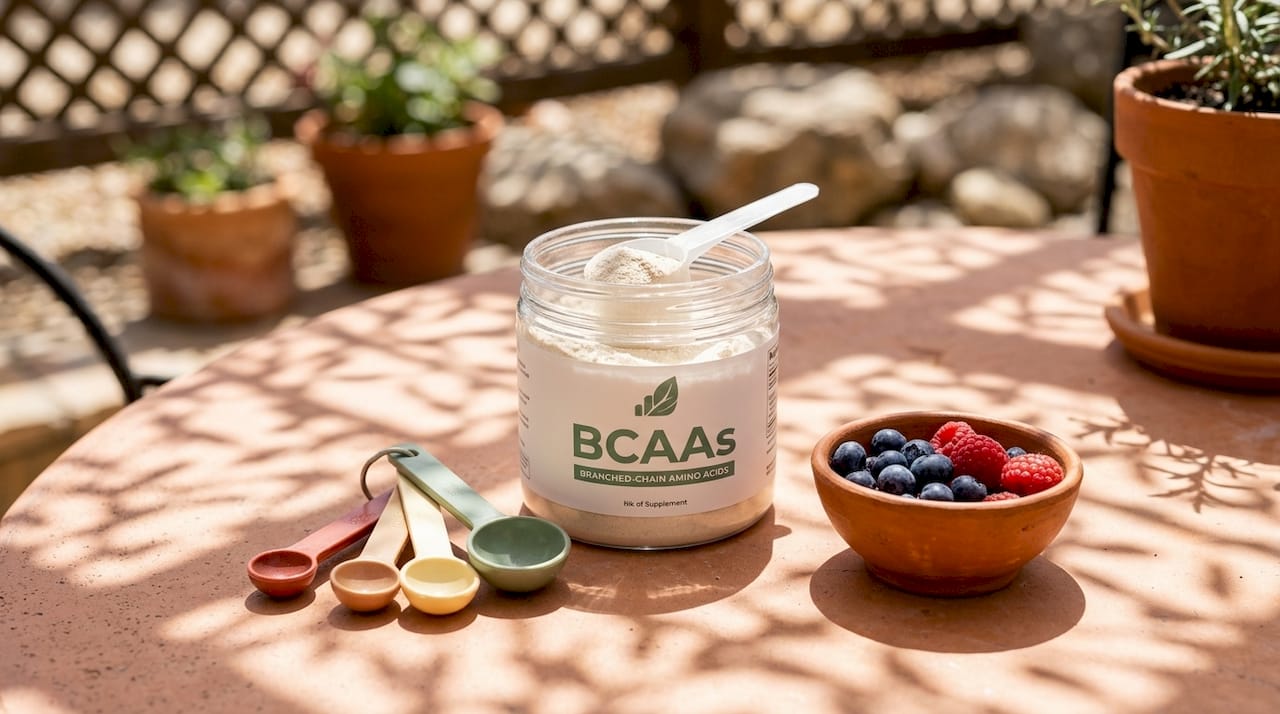
After 40, your muscles become less sensitive to these anabolic signals. This is anabolic resistance in practice. Where a younger athlete might need 20 grams of protein to maximally stimulate muscle repair, an older adult may need significantly more, or a higher leucine concentration, to achieve the same response. This is why leucine enrichment in BCAA formulas matters more as you age, not as a marketing claim but as a physiological necessity.
BCAAs also reduce inflammation and muscle damage markers after hard training. A meta-analysis of 18 RCTs found large effects in soreness reduction, with the peak benefit appearing around 72 hours post-exercise. For anyone training 3 to 4 times per week after 40, that soreness window directly affects your ability to train consistently and recover between sessions.
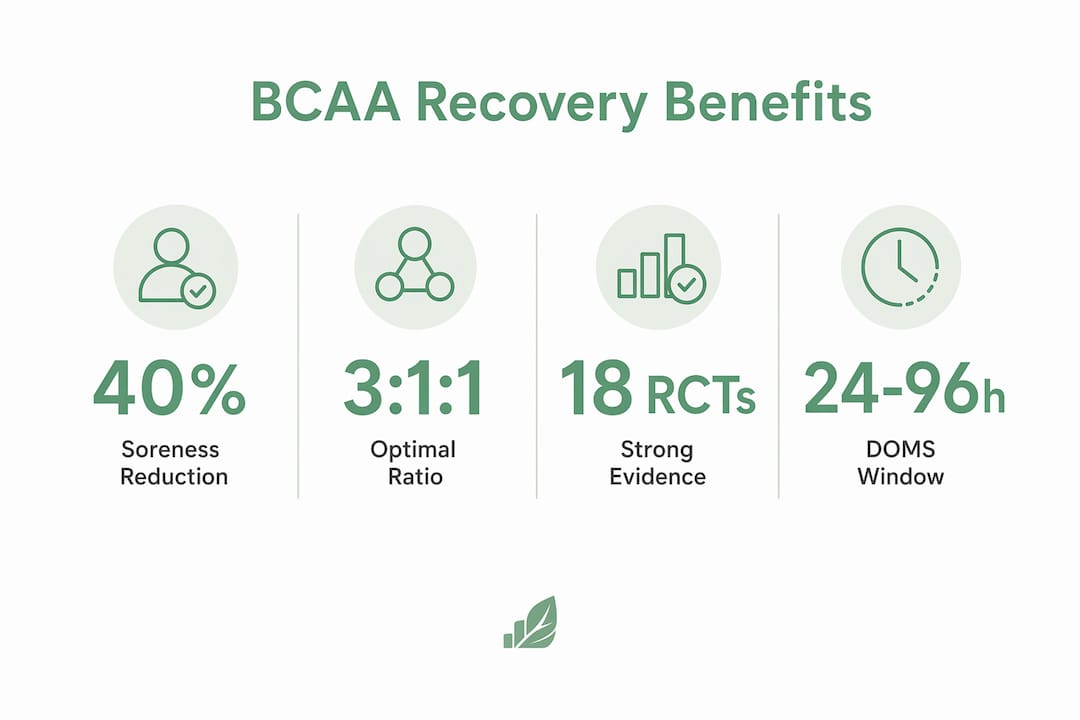
Pro Tip: If you are over 40 and training hard, the most reliable benefit you will get from BCAAs is not faster muscle growth. It is reduced soreness in the 24 to 72 hours after your workout, which lets you stay consistent with your program.
Here is what BCAAs specifically do in the recovery process:
- Activate the mTOR pathway via leucine to trigger muscle protein synthesis
- Inhibit muscle proteolysis, meaning they slow the breakdown of muscle tissue during and after exercise
- Reduce markers of exercise-induced muscle damage and inflammation
- Blunt the severity and duration of DOMS from 24 to 96 hours post-exercise
- Support brain-muscle metabolic signaling, which affects fatigue perception during training
What does the clinical evidence say about BCAAs and aging muscles?
The research picture for BCAAs and muscle recovery in adults over 40 is clearer than most supplement categories, though it comes with important nuance. A 2026 randomized controlled trial examined home-based resistance exercise combined with amino acid supplementation in adults aged 60 to 80. The group receiving exercise plus supplementation showed statistically significant improvements in Chair-Stand-Test performance and handgrip strength compared to exercise alone. This matters because functional strength, not just soreness scores, is the real-world outcome that affects quality of life after 40.
The 2025 review of 21 studies on BCAAs and aging populations reinforced this picture. Leucine-enriched formulas combined with resistance training consistently produced improvements in physical performance, reduced fatigue, and better daily functioning. The effect was not uniform across all studies, and variability in dosing, participant fitness levels, and baseline protein intake created inconsistency in some outcomes. But the direction of evidence is clear: BCAAs plus exercise outperform exercise alone for recovery in older adults.
“BCAAs are not standalone boosters. They amplify the anabolic response to exercise and protein intake, but require proper nutrition and training to be effective in older adults.”, Frontiers in Nutrition, 2025
Where the evidence gets more complicated is muscle hypertrophy. A review of 22 trials found strong evidence for soreness reduction but weak and inconsistent evidence that BCAAs alone drive meaningful muscle growth. This is a critical distinction for anyone over 40 who is supplementing with BCAAs hoping to build significant mass. The soreness and recovery benefits are real and well-supported. The muscle-building claims require adequate total protein, progressive resistance training, and sufficient calories to materialize.
| Outcome | Evidence strength | Key condition |
|---|---|---|
| Soreness reduction (DOMS) | Strong, consistent across 18+ RCTs | BCAAs taken around workouts |
| Muscle protein synthesis | Moderate, leucine-dependent | Leucine-enriched formula required |
| Functional strength gains | Moderate, RCT-supported | Combined with resistance exercise |
| Muscle hypertrophy | Weak, inconsistent | Requires complete protein and training |
| Fatigue reduction | Moderate, aging-specific benefit | Consistent supplementation needed |
How should people over 40 use BCAAs for optimal recovery?
Getting real results from BCAAs after 40 requires more than buying a tub and mixing it with water. The research points to specific conditions that determine whether you see a benefit or waste your money. Here is a practical framework based on the clinical evidence.
-
Choose a leucine-enriched formula. Standard 2:1:1 BCAA ratios (leucine:isoleucine:valine) are a baseline, but formulas with a higher leucine concentration, such as 3:1:1 or 4:1:1, are better suited for older adults. Leucine triggers mTOR-dependent synthesis, and suboptimal formulations limit efficacy. Check the label before you buy.
-
Time your intake around workouts. Taking BCAAs 30 minutes before training or immediately after is the most studied timing window. For recovery specifically, continuing BCAA intake during the 24 to 72 hour DOMS window post-exercise extends the soreness-reduction benefit. This does not mean megadosing. It means consistent, timed use.
-
Do not replace protein with BCAAs. This is the most common mistake. BCAAs lack the full spectrum of essential amino acids that complete muscle repair requires. Whey protein, whole food protein sources, or a complete essential amino acid supplement must form the foundation of your recovery nutrition. BCAAs work on top of that foundation, not instead of it.
-
Pair supplementation with resistance training. The clinical improvements in strength and function documented in RCTs all involved resistance exercise as the primary stimulus. BCAAs without progressive training produce minimal recovery benefit. The supplement amplifies the training signal; it does not create one.
-
Track your total protein intake. Adults over 40 benefit from 1.6 to 2.2 grams of protein per kilogram of body weight daily to support muscle maintenance and recovery. If your diet already hits this target consistently, BCAAs add a soreness-reduction benefit. If your protein intake is low, fixing that first will produce a larger return than any supplement.
Pro Tip: Keep a simple training log and rate your soreness on a 1 to 10 scale each morning for two weeks before starting BCAAs, then two weeks after. This gives you a personal data point that no study can replicate for your specific body and training load.
How do BCAAs compare to other recovery supplements for people over 40?
BCAAs are one tool in a broader recovery toolkit, and understanding where they fit relative to other options helps you spend your money wisely. The comparison that matters most is BCAAs versus complete protein supplements like whey protein isolate.
Whey protein contains all essential amino acids, including a naturally high leucine content, and has a larger and more consistent evidence base for muscle protein synthesis than isolated BCAAs. If you are already consuming adequate whey protein post-workout, adding BCAAs on top provides marginal additional benefit for muscle growth. The primary remaining benefit is soreness reduction, which whey protein does not address as directly or as quickly.
Creatine monohydrate is the other supplement worth serious consideration for anyone over 40. Creatine supports ATP regeneration during high-intensity training, reduces muscle damage markers, and has decades of safety data. Unlike BCAAs, creatine has consistent evidence for muscle hypertrophy and strength gains in older adults. Many people over 40 benefit from using both: creatine for strength and muscle maintenance, BCAAs for soreness management and recovery between sessions.
Beyond supplements, several lifestyle factors affect muscle recovery after 40 more than any pill or powder:
- Sleep quality: Growth hormone release during deep sleep drives muscle repair. Seven to nine hours is not optional for older athletes.
- Vitamin D: Deficiency is common after 40 and directly impairs muscle function and recovery. Testing and correcting levels is a higher priority than most supplements.
- Magnesium: Supports muscle relaxation, sleep quality, and protein synthesis. Many adults are deficient without knowing it.
- Total caloric intake: Training in a significant caloric deficit blunts muscle protein synthesis regardless of BCAA intake.
BCAAs offer a specific advantage in one scenario: training while in a caloric deficit. When calories are restricted, muscle breakdown accelerates. BCAAs, particularly leucine, help inhibit this proteolysis and preserve lean mass during fat loss phases. For anyone over 40 managing body composition while maintaining training volume, this is a legitimate and evidence-supported use case.
| Supplement | Primary benefit for over 40 | Evidence quality | Best combined with |
|---|---|---|---|
| BCAAs (leucine-enriched) | Soreness reduction, MPS support | Moderate to strong | Resistance training, whey protein |
| Whey protein isolate | Full MPS, muscle maintenance | Strong | Resistance training |
| Creatine monohydrate | Strength, hypertrophy, ATP support | Very strong | Resistance training |
| Vitamin D | Muscle function, immune support | Strong | Magnesium, sunlight exposure |
| Magnesium glycinate | Sleep, muscle relaxation | Moderate | Vitamin D, quality sleep |
Key takeaways
BCAAs support muscle recovery after 40 most reliably through soreness reduction and leucine-driven muscle protein synthesis, but only when combined with resistance training and sufficient total protein intake.
| Point | Details |
|---|---|
| Soreness reduction is the top benefit | BCAAs reduce DOMS from 24 to 96 hours post-exercise, with peak effect around 72 hours. |
| Leucine enrichment is non-negotiable | Formulas with higher leucine ratios (3:1:1 or 4:1:1) overcome anabolic resistance in older adults. |
| BCAAs are not protein replacements | Complete protein sources must anchor recovery nutrition; BCAAs supplement, not substitute. |
| Resistance training activates the benefit | Clinical improvements in strength and function require exercise as the primary stimulus. |
| Creatine and whey protein complement BCAAs | A multi-supplement approach produces better outcomes than BCAAs alone for adults over 40. |
What I have actually learned about BCAAs after 40
The supplement industry oversells BCAAs as a muscle-building standout, and the fitness community often dismisses them entirely as useless if you eat enough protein. Both positions miss the point. My honest read of the evidence, and of watching people over 40 train and supplement for years, is that BCAAs occupy a specific and genuinely useful niche.
The people who benefit most are not the ones with perfect diets and optimal protein intake. They are the ones training hard three to four times per week, dealing with real soreness that limits their consistency, and looking for something that takes the edge off recovery without adding calories or complexity. For that person, a leucine-enriched BCAA product taken around workouts is a reasonable and evidence-backed choice.
What I find frustrating is the number of people over 40 who spend money on BCAAs while sleeping six hours a night, skipping resistance training, and eating 80 grams of protein daily. No supplement fixes a broken foundation. The anabolic resistance challenges that come with aging are real, but they are addressed first by training harder, eating more protein, and sleeping better. BCAAs come after that.
The research on leucine-enriched formulas is genuinely promising, and I expect the next wave of RCTs to produce more precise dosing guidance for adults in their 40s and 50s specifically, rather than lumping everyone over 60 together. Until then, treat BCAAs as a recovery support tool with a clear and specific job: reduce soreness, support protein synthesis, and help you train consistently. That is a real benefit. It is just not magic.
matteo
Find the right recovery supplements for your goals
If you are over 40 and serious about muscle recovery, the quality and formulation of your supplements matter as much as the category. Not all BCAA products deliver the leucine concentrations that clinical research supports, and the difference between a well-formulated product and a generic blend is significant.
Rankofsupplements provides science-backed reviews and rankings to help you identify products that actually deliver on their label claims. For a deeper look at specific muscle recovery supplements, the Nutrigo Lab Strength review covers a product designed for strength and recovery in active adults. You can also explore the full supplement ingredient library to understand exactly what leucine, isoleucine, and valine do at the molecular level before you buy. For a broader view of supplements by health goal, including muscle recovery and aging-related conditions, Rankofsupplements organizes the evidence by outcome so you can match products to your specific needs.
FAQ
Do BCAAs actually reduce muscle soreness after 40?
Yes. A meta-analysis of 18 RCTs found that BCAAs significantly reduce DOMS from 24 to 96 hours after intense exercise, with the largest effect around 72 hours post-workout. This benefit is consistent and well-supported across multiple study designs.
How much leucine do you need in a BCAA supplement for it to work?
Leucine-enriched formulas with ratios of 3:1:1 or higher (leucine to isoleucine to valine) are recommended for adults over 40 to overcome anabolic resistance. Standard 2:1:1 formulas may provide suboptimal leucine concentrations to trigger meaningful muscle protein synthesis in aging muscles.
Can BCAAs replace protein shakes for muscle recovery?
No. BCAAs lack the full spectrum of essential amino acids required for complete muscle repair. Whey protein or another complete protein source must anchor your recovery nutrition, with BCAAs serving as a targeted supplement on top of adequate total protein intake.
When is the best time to take BCAAs for recovery?
The most studied and effective timing is 30 minutes before training or immediately after. Continuing BCAA intake during the 24 to 72 hour window following intense exercise extends the soreness-reduction benefit for older adults training at high frequency.
Are BCAAs worth taking if you already eat enough protein?
If your total protein intake consistently meets 1.6 to 2.2 grams per kilogram of body weight daily, BCAAs add limited muscle-building benefit. Their primary remaining value is soreness reduction and recovery support between sessions, which complete protein sources do not address as directly.