
TL;DR:
- Herbal supplements support health through whole-plant synergy and provide longer-term, systemic benefits. Clinical research backs their use for stress, joint health, immunity, and cognition, especially when standardized and third-party tested. Consistent use over weeks is essential, and quality certifications are crucial to ensure safety and efficacy.
Herbal supplements are plant-based products used to support systemic health, and their primary advantages stem from whole-plant synergy that promotes wellness with fewer side effects than many synthetic alternatives. Unlike isolated pharmaceutical compounds, herbs like ashwagandha, curcumin, and ginkgo biloba deliver multiple active constituents that work together to produce balanced, gradual effects. Clinical research increasingly supports their use for stress relief, joint comfort, immune function, and cognitive support. The FDA classifies herbal supplements as dietary supplements, meaning they fall under the Dietary Supplement Health and Education Act (DSHEA), and third-party standards from USP and NSF International provide the quality benchmarks that separate effective products from risky ones. Understanding the advantages of herbal supplements means knowing both what they can do and how to choose them wisely.
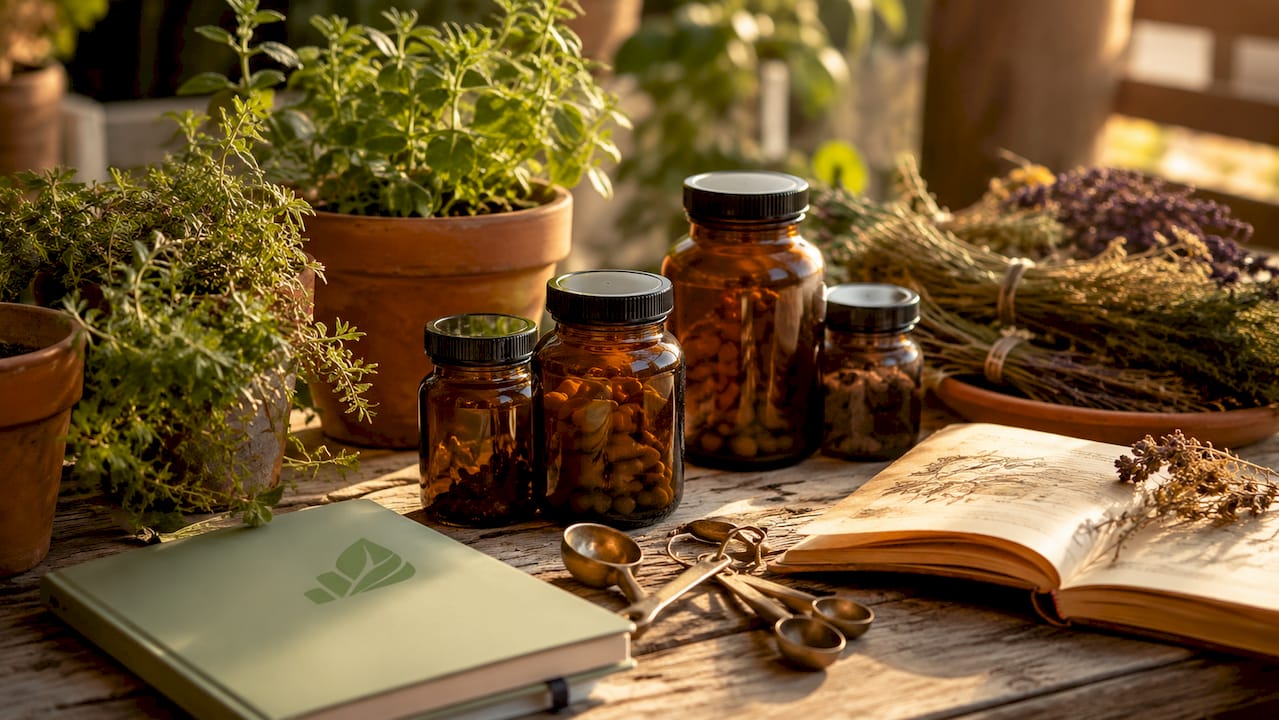
1. Advantages of herbal supplements: whole-plant synergy
Herbal supplements work through whole-plant synergy, meaning dozens of active compounds act together rather than one isolated molecule acting alone. This is the defining difference between a standardized turmeric extract and a synthetic anti-inflammatory pill. The result is a more balanced, systemic effect that tends to be gentler on the body over time.
Synthetic supplements deliver concentrated, targeted nutrient dosages that correct specific deficiencies quickly. Herbal supplements, by contrast, are best suited for long-term support of overall wellness. Knowing this distinction prevents misuse and sets realistic expectations.
2. How herbal supplements support stress relief and mental wellness
Ashwagandha, valerian, and St. John’s Wort are the three most clinically studied herbs for stress, anxiety, and sleep. Each works through a different mechanism. Ashwagandha reduces cortisol levels. Valerian modulates GABA receptors to promote relaxation. St. John’s Wort influences serotonin reuptake, which is why it improves mood in mild-to-moderate depression.
Standardized ashwagandha root extract doses of 240 to 600 mg per day show measurable improvements in stress and anxiety within 2 to 4 weeks. That timeline matters because people who expect overnight results often abandon effective protocols too early.
These herbs carry real interaction risks. Herb-drug interactions with sedative or serotonergic medications can cause excessive sedation or serotonin syndrome. Anyone taking prescription antidepressants, sleep aids, or anti-anxiety medications must disclose herbal supplement use to their healthcare provider before starting.
- Ashwagandha: Reduces cortisol and supports adrenal function; best for chronic stress
- Valerian root: Promotes sleep onset and reduces nighttime waking; works best taken 30 to 60 minutes before bed
- St. John’s Wort: Improves mood in mild-to-moderate depression; interacts with SSRIs, blood thinners, and oral contraceptives
- Lemon balm: Mild anxiolytic with a strong safety profile; often combined with valerian for sleep support
Pro Tip: Start with one adaptogen at a time, not a stack of three. Single-herb trials let you identify what works for your body before adding complexity.
For a deeper look at evidence-based options, Rankofsupplements maintains a stress and anxiety guide covering dosing, timing, and product quality criteria.
3. How herbal supplements aid joint comfort and inflammation
Curcumin, the active compound in turmeric, is the most studied herbal option for joint health. Standardized curcumin extracts can modestly reduce knee pain and improve joint function, with efficacy comparable to low-dose NSAIDs but with fewer gastrointestinal side effects. That is a meaningful clinical advantage for people who cannot tolerate long-term ibuprofen use.
Ginger standardized extract is the second major player in this category. It reduces inflammatory markers like prostaglandins and shows measurable improvements in pain and physical function in people with osteoarthritis. Both herbs work best when taken consistently for at least 4 to 8 weeks.
Bioavailability is the key challenge with curcumin. Standard curcumin has poor absorption. Formulations that include piperine (black pepper extract) or use phospholipid complexes like Meriva significantly increase blood levels of active curcumin. Always check the label for a bioavailability-enhanced form before purchasing.
- Curcumin with piperine: Increases curcumin absorption by up to several-fold compared to plain curcumin
- Boswellia serrata: Reduces leukotriene production, targeting a different inflammatory pathway than curcumin
- Ginger extract: Inhibits COX-2 enzymes similar to NSAIDs, with a gentler gastrointestinal profile
- Dosing range: Standardized curcumin extracts are typically studied at 500 to 1,500 mg per day in divided doses
4. What are the immune and cognitive benefits of herbal supplements?
Ginkgo biloba is the most studied herbal supplement for cognitive support. Ginkgo biloba extracts at 120 to 240 mg per day are among the best-documented options for modestly improving cognitive performance and supporting daily function in people with mild-to-moderate cognitive decline. The mechanism involves improved cerebral circulation and antioxidant protection of neurons.
Echinacea and garlic are the two most evidence-backed herbs for immune support. Echinacea stimulates innate immune activity and reduces the duration of upper respiratory infections when taken at the first sign of symptoms. Garlic’s active compound, allicin, has documented antimicrobial and immune-modulating properties.
The benefits of these herbs are real but modest compared to pharmaceutical interventions. Consistency matters more than dose size. Taking echinacea daily for months is less effective than taking it strategically at the onset of illness. Ginkgo requires at least 6 to 12 weeks of consistent use before cognitive effects become measurable.
- Ginkgo biloba: Supports memory and processing speed; most effective in older adults with early cognitive decline
- Echinacea purpurea: Reduces cold duration and severity; most effective taken at symptom onset
- Garlic extract: Supports immune defense and cardiovascular health; standardized for allicin content
- Elderberry (Sambucus nigra): Reduces flu symptom duration; well-tolerated with a strong safety profile in adults and children
5. What quality and safety factors shape herbal supplement benefits?
Quality is where the advantages of herbal medicine either hold up or collapse. 27.7% of tested herbal supplement products contained undeclared pharmaceutical adulterants, and 25% exceeded WHO limits for cadmium exposure. Those are not fringe cases. They represent a systemic supply-chain problem that affects mainstream retail products.
Heavy metal contamination is a direct health risk. Cadmium and lead contamination in herbal supplements is a significant predictor of acute liver failure. The risk is not theoretical. It shows up in emergency rooms.
Standardized herbal extracts with proper third-party testing provide more consistent efficacy and safety than non-standardized products. The certifications to look for are USP Verified, NSF Certified for Sport, and published Certificates of Analysis (COAs) from independent labs. These documents confirm potency, purity, and the absence of contaminants.
- Check for USP or NSF certification on the label before purchasing
- Request or look up the Certificate of Analysis (COA) for the specific batch
- Avoid products with proprietary blends that hide individual ingredient doses
- Verify the manufacturer follows Current Good Manufacturing Practices (cGMP) as required by the FDA
- Disclose all herbal supplement use to your doctor, especially if you take prescription medications
Unlabeled and untraceable herbal products increase contamination risk significantly. Batch traceability is not a luxury. It is the minimum standard for any supplement you put in your body.
Pro Tip: Search the FDA’s Dietary Supplement Ingredient Advisory List before buying any new herbal product. It flags ingredients with known safety concerns and saves you from avoidable risks.
Rankofsupplements covers supplement quality verification in detail, including how to read a COA and what red flags to look for on labels.
Key takeaways
The most effective approach to herbal supplements combines standardized extracts, third-party testing, and consistent use over weeks rather than days.
| Point | Details |
|---|---|
| Whole-plant synergy is the core advantage | Herbal supplements deliver multiple active compounds that work together for balanced, systemic effects. |
| Standardized dosing drives results | Ashwagandha at 240 to 600 mg/day and ginkgo at 120 to 240 mg/day show measurable effects within weeks. |
| Quality certification is non-negotiable | Look for USP, NSF, or COA documentation to avoid contamination and adulteration risks. |
| Herb-drug interactions are clinically significant | Always disclose herbal supplement use to your healthcare provider, especially with serotonergic or sedative medications. |
| Consistency outperforms high doses | Most herbal benefits require 4 to 12 weeks of regular use before effects become measurable. |
What I’ve learned from years of watching people use herbal supplements wrong
Most people approach herbal supplements the same way they approach over-the-counter pain relievers. They take something when they feel bad and stop when they feel better. That approach fails with herbs almost every time.
The research on ashwagandha, ginkgo, and curcumin is consistent on one point: these compounds need time to accumulate and exert their effects. Two days of turmeric does nothing for your joints. Eight weeks of standardized curcumin with piperine, taken daily, can genuinely move the needle on pain and function. The people who dismiss herbal supplements as ineffective are often the ones who never gave them a fair trial.
The second mistake I see constantly is treating “natural” as a synonym for “safe.” Pharmacologically active plant compounds cause real drug interactions. St. John’s Wort reduces the effectiveness of birth control pills, blood thinners, and HIV medications. That is not a minor footnote. It is a reason to treat herbal supplements with the same seriousness you give prescription drugs.
The third issue is quality blindness. People spend $60 on a bottle of ginkgo from a brand with no third-party testing and wonder why they see no results. The herbal supplement benefits you read about in clinical trials come from standardized extracts at verified doses. A random capsule of dried herb powder is not the same thing.
My honest recommendation: pick one herb, choose a product with USP or NSF certification, commit to 8 weeks, and track your results. That is the only way to know if an herb works for you specifically. Stacking five adaptogens in week one is a recipe for confusion, not wellness.
matteo
Rankofsupplements: science-backed herbal supplement guidance
Finding trustworthy herbal supplement information is harder than it should be. Most content online either oversells benefits or ignores quality entirely.
Rankofsupplements takes a different approach. The supplement ingredient library covers hundreds of herbal compounds with evidence summaries, dosing ranges, and safety notes drawn from peer-reviewed research. The 2026 supplement rankings organize top-rated products by health goal, so you can find options for stress, joint health, immunity, and cognition without sorting through unverified claims. Every review prioritizes third-party testing and standardized extract quality. If you want to make a genuinely informed choice, that is the right place to start.
FAQ
What are the main advantages of herbal supplements?
Herbal supplements deliver multiple active plant compounds that work together for systemic, long-term health support. Their primary advantages include gentler side effect profiles, whole-plant synergy, and clinical evidence for stress relief, joint comfort, immune function, and cognitive support.
Are herbal supplements safe to take with prescription medications?
Not always. Herb-drug interactions are clinically significant, particularly with sedative, serotonergic, and anticoagulant medications. Always disclose herbal supplement use to your healthcare provider before starting any new product.
How long does it take for herbal supplements to work?
Most herbal supplements require 4 to 12 weeks of consistent daily use before measurable effects appear. Ashwagandha shows stress-related improvements in 2 to 4 weeks, while ginkgo biloba typically requires 6 to 12 weeks for cognitive benefits.
How do I know if an herbal supplement is high quality?
Look for USP Verified or NSF Certified labels, and request a Certificate of Analysis (COA) for the specific batch. Standardized extracts with verified potency and third-party purity testing are significantly more reliable than non-standardized products.
What is the difference between herbal remedies and synthetic supplements?
Herbal remedies act through whole-plant synergy for balanced, systemic effects suited to long-term support. Synthetic supplements deliver concentrated, isolated nutrients best used to correct specific deficiencies quickly.
Recommended
- Related article: Common supplement myths debunked separates fact from fiction on herbal supplement safety and effectiveness.
- Top list: Supplements by health goal and condition ranks the best options across stress, immunity, joint health, and cognition.
- Product review: The Rankofsupplements ingredient library details specific herbal extracts, dosing evidence, and safety profiles to guide your purchase.
- Quality guide: How to check supplement quality in 2026 walks you through COA verification, label red flags, and certification standards.